Tool steel and tungsten carbide are both widely used for stamping die components, but they solve different problems. The best choice depends on the stamped material, sheet thickness, production volume, feature geometry, impact load, lubrication, maintenance strategy and required tool life.
When Tool Steel Is the Practical Choice
Tool steels are commonly used for punches, die inserts, forming components, pilots, stripper inserts and support parts. Depending on the grade and heat treatment, they can provide a useful balance of wear resistance, toughness, machinability and cost.
High-speed steels may be selected where elevated hardness and wear resistance are needed without giving up as much toughness as a very hard carbide component. Cold-work tool steels are common in cutting and forming applications, while hot-work grades may be considered where operating temperature and thermal fatigue matter.
When Tungsten Carbide Adds Value
Tungsten carbide offers very high hardness, compressive strength and wear resistance. It can extend service life in high-volume production and abrasive applications, especially where cutting edges and precision features must remain stable over many cycles.
Carbide is less tolerant of impact, misalignment and tensile stress than many tool steels. Sharp internal corners, insufficient support, poor press alignment or unstable strip feeding can increase chipping risk. Component geometry and assembly support therefore matter as much as the material grade.
Compare the Main Tradeoffs
| Factor | Tool steel | Tungsten carbide |
|---|---|---|
| Wear resistance | Good to very high, depending on grade and treatment | Very high |
| Toughness | Generally better for impact and shock loads | Lower; requires stable support and alignment |
| Machining and repair | Usually easier to machine, modify and repair | Requires suitable grinding and EDM processes |
| Initial cost | Usually lower | Usually higher |
| Potential tool life | Application-dependent | Often longer in stable, abrasive, high-volume applications |
Questions to Answer Before Selecting a Material
- What material and thickness will be stamped?
- Is the operation cutting, forming, bending or drawing?
- What production volume and maintenance interval are expected?
- Does the component experience impact, side load or misalignment?
- How is the component supported and retained?
- What edge condition, clearance and surface finish are required?
- Can the production team grind, replace or adjust the component easily?
Heat Treatment, Coatings and Surface Condition
Material grade alone does not determine performance. Heat-treatment quality, retained stress, surface finish, cutting-edge preparation and coating selection can significantly affect wear and failure behavior. Nitriding or PVD coatings may improve surface performance in suitable applications, but coating thickness and processing temperature must be considered in the dimensional plan.
Precision and Inspection
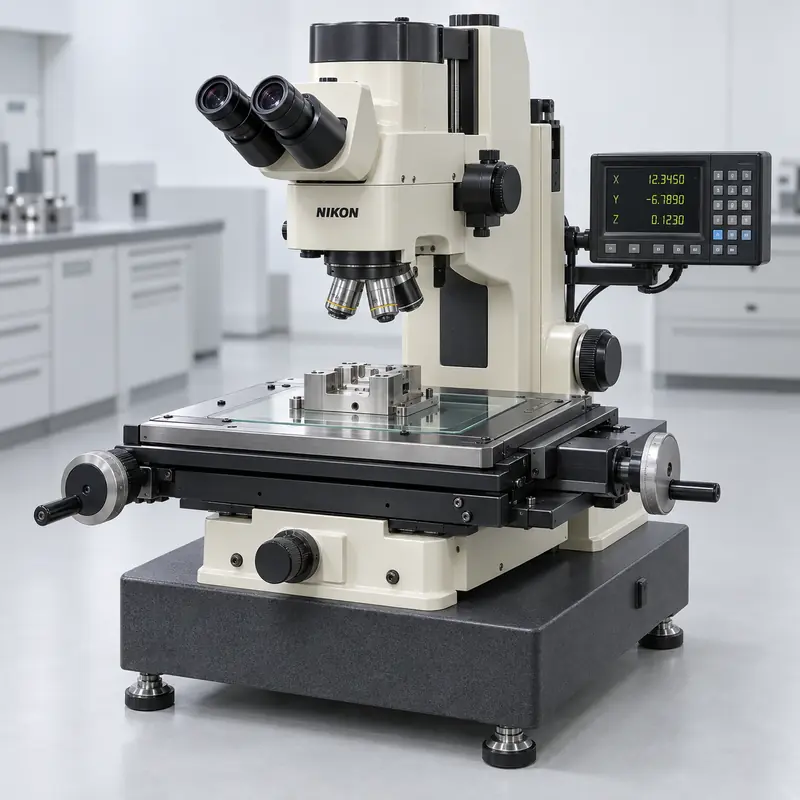
Stamping die clearance and alignment can depend on a small number of critical features. Identify these features on the drawing and define meaningful datums. For selected critical features, tolerances as tight as ±0.001 mm (approximately ±0.00004 in) may be feasible, depending on part size, geometry, material, heat treatment and the agreed measurement method. The achievable tolerance should be confirmed during engineering review.
A Better Selection Method
Compare total production cost rather than material price alone. A higher-cost component may be justified if it reduces stoppages and maintenance, while a tougher and more easily repairable steel component may be better where impact or process instability is unavoidable. Review the failure mode of the current component before changing grades.
Explore SKYPU MOLD’s custom stamping die component capabilities, including punches, dies and inserts. For RFQ details, see our replacement punch and die component checklist and first article inspection guide.
Need Help Reviewing a Die Component?
Send the drawing, stamped material, production conditions, current failure mode and required quantity to Lily@ksskypu.com. Our team can review manufacturing feasibility before quotation.